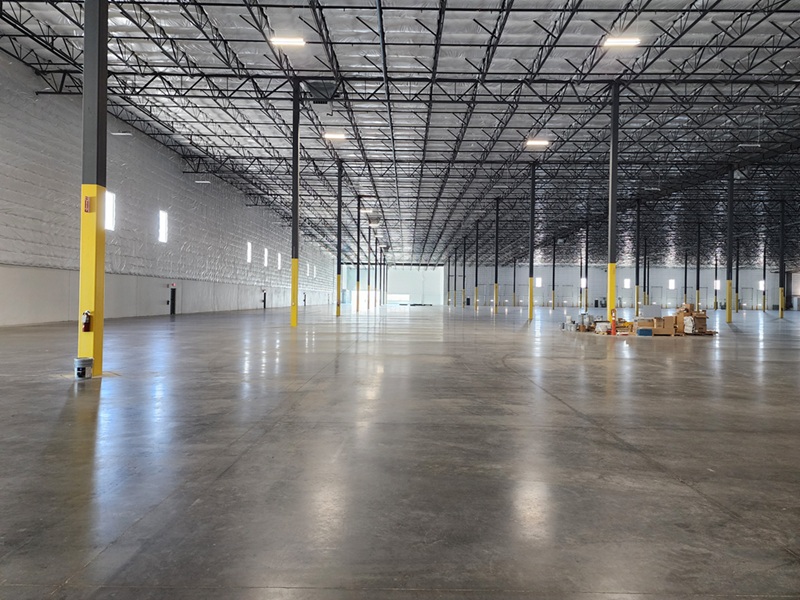
CONFIDENTIAL CLIENT – Battery Assembly Facility (AZ)
Location: Arizona (AZ)
Services: Mechanical, Electrical, and Plumbing
Category: INDUSTRIAL
Area: 175,000 sq. Ft
Software: AutoCAD, HAP5.1, Bluebeam, Pipe sizer, and duct sizer.
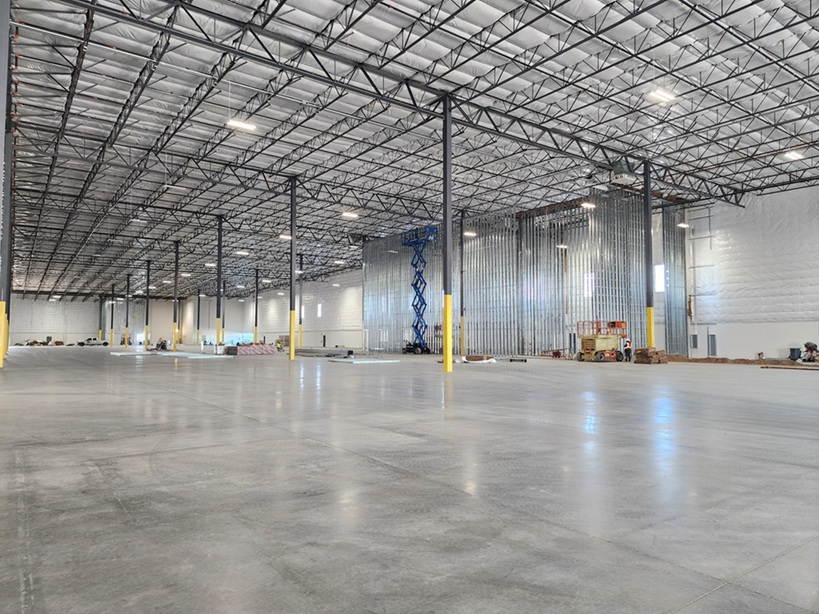
Following the successful completion of MEP design services for the Illinois facility, the same confidential client selected 3S MEP to support its continued U.S. expansion with a large-scale Battery Assembly manufacturing facility in Arizona (AZ).
3S MEP provided comprehensive Mechanical, Electrical, and Plumbing (MEP) design services along with BIM coordination. The design focused on safety, energy efficiency, scalability, and full compliance with U.S. codes, while supporting phased implementation aligned with the client’s operational strategy.
Phase I
Phase I established the core infrastructure required to support initial battery assembly operations.
The mechanical design included an air compressor room sized to accommodate two large industrial compressors and associated accessories. Ventilation and heat rejection were achieved through large wall louvers for intake air and gooseneck exhaust fans for effective airflow and thermal control.
A dedicated forklift charging area was designed with a hydrogen gas exhaust and ventilation system to safely remove hydrogen generated during charging operations, in compliance with applicable safety codes.
HVAC systems were also provided for office spaces and breakroom areas to ensure occupant comfort and energy-efficient operation.
Plumbing and sanitary systems were designed to serve both industrial and administrative areas, including offices, restrooms, and breakrooms. Condensate discharge from air compressors and air coolers was properly routed to the sanitary system. Water and sanitary riser diagrams were developed to establish a clear and future-ready utility framework.
Lighting and lighting control layouts were designed in accordance with IECC requirements, incorporating energy-efficient automatic control strategies. Power distribution systems were developed to serve battery assembly equipment in compliance with NEC standards and manufacturer requirements.
A critical design constraint was the utilization of existing electrical utility services. Equipment loads were strategically segregated between two existing service entrance sections (SES) to ensure that neither the overall service capacity nor individual SES limits were exceeded. Electrical documentation included circuiting, overcurrent protection, conductor ampacity, fault current calculations, and voltage drop analysis.
Phase II
Phase II expanded MEP systems to support additional production areas and employee amenities.
HVAC systems with integrated humidification were designed for battery assembly support areas requiring stable temperature and humidity conditions. RTU-based systems were selected to provide reliable environmental control for sensitive operations. Additional HVAC and ventilation systems were provided for a second breakroom to maintain indoor air quality and occupant comfort.
Plumbing and sanitary systems were extended to serve a new breakroom and two additional washrooms. Water supply and drainage layouts were coordinated with architectural plans and seamlessly connected to the existing infrastructure to minimize disruption to ongoing operations.
Electrical design for Phase II included additional power distribution and lighting control layouts developed in compliance with NEC and IECC requirements. All systems were coordinated with equipment specifications to support safe operation and future expansion.