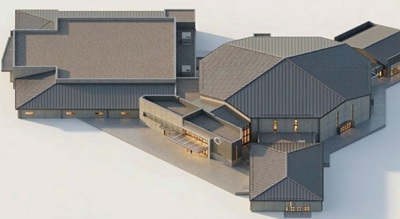
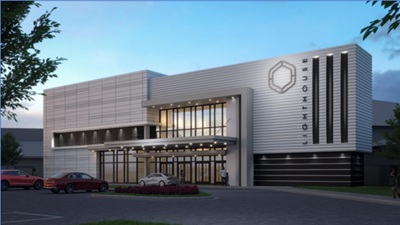
THE LIGHTHOUSE CHURCH OF HOUSTON
Location: 6650 Rankin Rd, Humble, TX 77376
Project: The Lighthouse Church of Houston
Services: Mechanical, Electrical, and Plumbing
Category: Church
Area: 54,000 Sq. Ft.
Software: Revit 2025, HAP5.11, Bluebeam, COMcheck
Lighthouse Church of Houston, located in Humble, Texas, is a 54,000 sq. ft. facility. The mechanical design was developed to maintain a comfortable indoor environment while ensuring efficient energy use and maintaining high indoor air quality. Detailed cooling load calculations were conducted to determine the appropriate HVAC system configuration and equipment sizing for the facility. To improve indoor air quality while reducing the required outdoor air intake, Indoor Air Quality Procedure (IAQP) devices were incorporated in the sanctuary areas. This approach helped lower the overall cooling load and reduce the required rooftop unit (RTU) capacity. The office areas were designed using a Variable Air Volume (VAV) system, allowing individual rooms to maintain different temperature settings based on occupancy and operational needs. Additionally, the ceiling space was utilized as a return air plenum, which minimized unnecessary ductwork and enhanced overall system efficiency. As part of the project’s value engineering strategy, several existing mechanical systems—including rooftop units (RTUs), exhaust fans, and air handling units (AHUs)—were retained and integrated into the new design to reduce overall project costs. Since the existing AHUs were originally designed for cooling-only operation, duct heaters were installed to provide heating for the conditioned spaces. Additional systems were incorporated to address specific functional requirements:
Overall, this design approach resulted in an efficient HVAC system that balances occupant comfort, indoor air quality, and cost-effective integration of existing mechanical equipment. The plumbing design for this project included natural gas distribution, domestic water supply, and sanitary waste systems to ensure the facility operates safely, reliably, and in full compliance with applicable codes and standards. The natural gas piping system was designed to serve the generator and other gas-fired equipment, with pipe sizing determined based on equipment load requirements, allowable pressure drop limits, and calculated flow rates in accordance with relevant code provisions. The plumbing scope also included the design of cold and hot domestic water distribution systems, along with a fully vented sanitary drainage system, to provide adequate water supply and efficient wastewater removal throughout the building. Special attention was given to the design of the baptismal (baptist) tub, which included a dedicated water supply along with controlled filling and draining arrangements. The system was properly integrated with the sanitary drainage network to support ceremonial use while maintaining reliable and hygienic operation. Plumbing fixtures, water heaters, recirculation pumps, and associated system components were carefully selected and sized to meet occupant demand and comply with regulatory requirements. Critical equipment, including the water heating system, was evaluated through detailed calculations to ensure efficient operation, adequate capacity, and long-term performance. The electrical scope encompassed the design of a comprehensive lighting, power, and fire alarm system in full compliance with the International Energy Conservation Code (IECC 2021), National Electrical Code (NEC 2023), and NFPA 72. For the lighting system, the design incorporated energy-efficient strategies such as occupancy sensors and time clocks to control lighting based on space usage. Emergency lighting and life safety systems, including exit signs and emergency luminaires, were provided throughout the facility in accordance with IECC 2021 and relevant life safety requirements to ensure compliance and occupant safety. For the power system, the existing electrical infrastructure was thoroughly analyzed, and detailed load calculations were performed to develop an optimized design. The service was upgraded to meet increased demand, and significant alterations were made to the existing system, including the introduction of dedicated distribution where required. Feeder sizing was carried out based on voltage drop considerations, and panelboards and circuit breakers were selected in accordance with fault current calculations. The design also included a dedicated power layout for the audio-visual system, incorporating a separate grounding system. All power system components were designed in compliance with NEC 2023 while ensuring efficient system performance and integration with existing infrastructure. For the fire alarm system, a conceptual design was developed in accordance with NFPA 72. The design included the provision of all necessary fire alarm devices to ensure adequate coverage and compliance with life safety requirements. In conclusion, the MEP designs for The Lighthouse Church of Houston were carefully tailored to create an efficient, safe, and comfortable environment for young children, balancing the operational needs of the facility with stringent regulatory requirements.
|